
Home
About
Clients
Sample projects
Contact
Sample work by CP-educational
Some of the projects undertaken by CP-educational. Click onto the links to go to view the materials.
 |
Aviation Heritage LincolnshireLincolnshire hosts a wealth of aviation heritage visitor attractions. The web-based resources were developed in partnership with Innovate Educate. Using aviation as a context, Cliff Porter Educational developed the science classroom activities and interactive learning materials available to download from the site. |
|
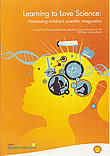 |
Learning to Love ScienceStudying science opens up a world of possibilities and scientists play a vital role in the UK society and economy. Yet fewer students are opting to study physical and chemical sciences post-16. This report explores school students' attitudes to science to establish why many disengage with the subject and what can be done to reverse this trend. It examines when and why pupils “switch off” from science and the extent to which the UK is missing out on a potential pool of scientists as a result. |
|
 |
Climate Choices Children's VoicesA web site aimed at key stage 2 teachers. Using food choices as a context, the site contains many interactive activities that can be used in the classroom to help children understand the problem of climate change. Includes presentations, activities, audio interviews, animations and video. |
|
 |
Science Learning CentresI have delivered training course in advanced ICT to schoolteachers at the National Science Learning Centre in York. Further courses are planned at the national and regional centres. |
|
 |
Industry-AnimatedPictures are worth a thousand words and this web site uses animations to explain industrial processes. Journey inside a cooling tower, see how plastic pipes are made and find out how the table salt on your chips is obtained. Pictures are available to spice up projects or presentations. Aimed at school children aged 5-11 years old with more detailed information for older ages and adults. |
|
 |
Sustainable Development
Sponsored by the Institute of Materials, Minerals and Mining, the resource is aimed at 11 to 18 year-olds. It will prove valuable for students taking science, geography and also to illustrate the principles of sustainability in citizenship. |
|
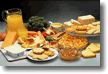 |
Understanding Food AdditivesProduced for the Food Additives and Ingredients Association, this web site explains the use of additives in food. Sections describe the different classes of additives, the regulation of their use and issues such as food sensitivity and hyperactivity are also examined. A comprehensive database allows users to search E-numbers to find their description and use. Learning materials give practical assistance in teaching about food additives in the secondary classroom. |
|
 |
An evaluation of the risk-ed web siteCommissioned for the Health and Safety Executive, this project involved research in secondary schools to evaluate the effectiveness of a web site explaining the concepts of risk. Focus group interviews were undertaken and analysed before preparing a final report for the HSE. |
|
 |
Heart and CirculationThis web resource, written for ASE's Schoolscience web site, has received excellent feedback from teachers who have used it with their students. The resource looks at the heart, circulation, disorders and their treatment. Written for 14-16 year old students, it is an excellent resource for the teaching of GCSE Science. |
|
 |
The Viagra™ storyThis web resource looks at the discovery, development and biology behind one of the most successful new medicines in recent times. Written for the Schoolscience web site, it is aimed at 14-16 year old school students but has a great deal of information that is of interest to the general public. |
|
|